
Deciding when to hire a doula is a big step, and the timing really depends on you. If you're looking for the sweet spot, most experts and experienced parents will point you to the second trimester, somewhere around 16 to 24 weeks. This gives you enough time to find the right person, build a real connection, and get the full benefit of their prenatal support without feeling rushed.
The Best Time to Hire Your Doula
Think of finding the perfect doula like picking a trusted guide for a huge, life-changing journey. It’s not just about their resume. It's about the chemistry between you. Starting your search in the second trimester gives you the breathing room to interview a few candidates and find someone whose personality and philosophy just click with yours.
This period is often ideal for a few key reasons. Most people are past the morning sickness of the first trimester but aren't yet in the final, exhausting stretch of pregnancy. You’ll likely have the energy and mental space to really focus on building this important relationship.
Understanding the Benefits of Timing
A doula's role kicks in long before labor ever starts. When you bring them on board in the second trimester, you gain a valuable resource for months. They're there to help with things like:
- Crafting a birth plan that truly reflects your values and wishes.
- Answering all those random questions that pop up between doctor's appointments.
- Providing emotional support and pointing you to resources that can help reduce anxiety.
- Guiding you through important decisions and preparations. This is also a great time to figure out when you should take childbirth classes and get them on the calendar.
This continuous support has a massive impact. The research is clear: having a doula leads to better birth outcomes. A major 2017 analysis, for instance, found that continuous support from a doula could reduce cesarean rates by up to 39%, shorten labor, and decrease the need for pain medication. Babies benefit, too, with a 38% lower risk of a low five-minute Apgar score.
To help you figure out what might work best for your unique situation, here’s a quick breakdown of the pros and cons of hiring at different stages.
Doula Hiring Timeline Comparison
| Hiring Stage | Pros | Cons | Best For |
|---|---|---|---|
| First Trimester | More time to build a deep bond, extensive prenatal education, and greater doula availability. | Can feel premature for some, and the financial commitment starts earlier. | Expecting parents who want maximum support and education from the very beginning. |
| Second Trimester | A balanced approach with ample time for connection and planning. This is the most popular hiring window. | The most sought-after doulas may already be booked up. | Most families looking for a well-rounded experience without feeling too early or too rushed. |
| Third Trimester | Still provides significant labor support and is great for last-minute decisions to have support. | Limited doula availability, and less time for prenatal bonding and education. | Those who decide they want support later in pregnancy or have unexpected needs arise. |
Ultimately, there's no single "right" answer. The key is to start looking when it feels right for you, giving yourself enough time to find a professional you trust to be by your side.
Understanding What a Doula Really Does
Before you can figure out when to hire a doula, it’s a good idea to get a clear picture of what they actually do. A lot of people have misconceptions about this role.
First things first: a doula is not a medical professional. They don’t deliver babies, give medical advice, or replace your doctor or midwife. Think of them more like a seasoned birth coach or an expert guide for your pregnancy and birth journey.
Their entire purpose is to provide continuous physical, emotional, and informational support. It’s like having someone in your corner whose only job is to focus on you. This means making sure you feel supported, understood, and respected every step of the way.
What Support Looks Like in Practice
A doula’s support is dynamic and changes based on your needs throughout pregnancy, birth, and postpartum. They’re a fantastic resource for evidence-based information, helping you think through your birth preferences and prepare for the big day.
When labor starts, their support becomes very hands-on. For example, your doula might:
- Offer comfort through massage or counter-pressure during contractions.
- Suggest different laboring positions to help your baby descend.
- Gently remind you to drink water or have a snack.
- Provide constant emotional encouragement for both you and your partner.
The doula’s role is to help you have a safe and satisfying birth as you define it. They don't impose their own beliefs. Instead, they empower you with information and support your choices, whatever they may be.
Having that steady, knowledgeable presence often creates a calmer, more confident atmosphere in the birth room. This support also takes the pressure off your partner, freeing them up to be present with you without feeling like they have to remember every comfort technique they learned in class.
Different Types of Doulas
It's also helpful to know that "doula" isn't a one-size-fits-all term. While most people immediately think of support during labor, their help can start much earlier or extend long after your baby arrives. You can take a deeper dive into what a birth doula does, but here’s a quick breakdown of the main types.
Birth Doulas are the most common. They focus on supporting you through late pregnancy, labor, and the immediate hours after delivery.
Postpartum Doulas are your lifeline after the baby is born. They help with newborn care, offer breastfeeding support, assist with light household tasks, and provide crucial emotional support as you navigate the fourth trimester.
Full-Spectrum Doulas offer support across the entire reproductive journey. This can include fertility, pregnancy loss, and abortion, in addition to birth and postpartum care. Each role is designed to provide compassionate, non-judgmental support tailored to your unique path.
Navigating the Key Hiring Timelines
Figuring out the perfect moment to bring a doula onto your birth team isn't about following a rigid rulebook. It's really about matching the timing to your own needs, personality, and what you hope to get out of the experience. Let's walk through the three main windows for hiring a doula, each with its own vibe and set of perks.
You can think of it like planning a big vacation. Some people are planners who want every flight, hotel, and activity mapped out months ahead. Others are more spontaneous, happy to book things just before they leave. Your pregnancy journey is a lot like that, and there's a hiring timeline that will feel just right for you.
The Early Bird: First Trimester
Hiring a doula in your first or early second trimester is what I call the "Early Bird" approach. This timeline is absolutely perfect for anyone who wants the maximum amount of prenatal support, education, and guidance. If you're a first-time parent battling a bit of anxiety or navigating a higher-risk pregnancy, having an expert by your side from the very beginning can be a massive relief.
This longer runway gives you and your doula plenty of time to build a deep, trusting relationship. They become your go-to person for information, helping you make sense of early pregnancy symptoms and even prepping you with questions for your doctor's appointments. The biggest win here is having a seasoned pro in your corner for the entire journey.
The Sweet Spot: Second Trimester
The most popular time to hire a doula is during the mid-to-late second trimester. This is the "Sweet Spot." It’s a beautifully balanced approach that gives you plenty of time to connect and plan without the commitment feeling too early. By this stage, you're usually past the initial fatigue and have more energy to focus on interviews and getting ready for birth.
This timeline still guarantees you get several months of invaluable prenatal support. Your doula can help you craft a birth plan, practice hands-on comfort techniques, and ensure you feel completely prepared for labor. It strikes an ideal balance, giving you ample time to prepare without the last-minute rush.
This decision tree helps visualize how a doula’s support maps to different emotional, physical, and informational needs you might have.
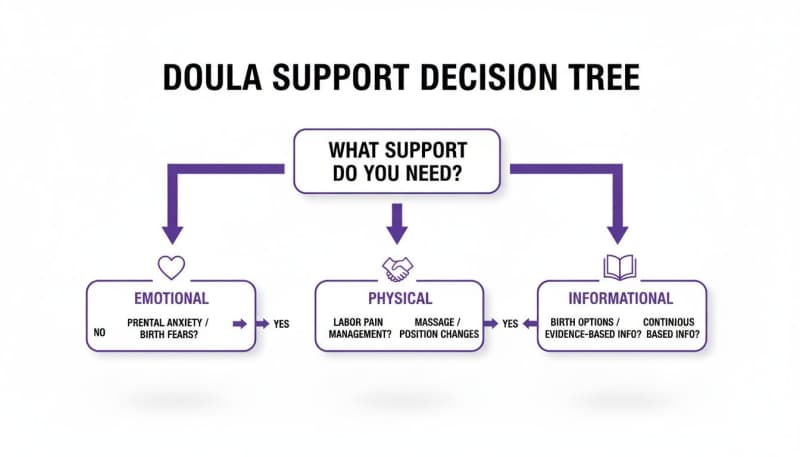
As you can see, no matter what your primary concern is, whether it's physical comfort, emotional reassurance, or just needing solid information, a doula provides comprehensive support that molds to your unique journey.
The Last Minute: Third Trimester
What happens if you're already well into your third trimester? Don't panic. It is absolutely not too late. The "Last Minute" hire still provides incredible benefits, especially when it comes to the intensity of labor and delivery.
Even with less prenatal time, a doula's continuous presence during labor can dramatically improve your birth experience. Their physical and emotional support during this intense period is a game-changer for many families.
This timeline is pretty common for people who discover what a doula is later in pregnancy or for those who have a sudden change of plans. While availability might be a bit tighter, many doulas keep a little flexibility for clients closer to their due dates. The focus just shifts to immediate, intensive birth prep, making sure you feel confident and supported when it counts the most. It just goes to show that powerful support is possible at any stage.
Signs You Should Hire a Doula Sooner
Sometimes, waiting until the second trimester just doesn't feel right. Certain situations can make getting support early on not just helpful, but absolutely essential for a positive pregnancy and birth. If you recognize any of these signs in yourself, it might be time to start your search for a doula sooner rather than later.
If you’re feeling a ton of anxiety about childbirth, you are definitely not alone. Bringing a doula on board early gives you months of reassurance. They become that steady, knowledgeable person you can text with fears or questions, helping you replace that anxiety with genuine confidence.
Navigating High-Risk Pregnancies
Getting a high-risk diagnosis can be completely overwhelming. All of a sudden, your pregnancy journey is filled with medical jargon and a lot of uncertainty. While a doula can't give medical advice, they are masters at helping you understand your options and figure out the right questions to ask your doctors.
For instance, they can come to appointments with you, take notes so you don't have to remember everything, and help you process it all afterward. It’s about making sure you feel informed and in control of the process, rather than just being swept along by medical decisions. Their goal is to ensure your voice is heard and your choices are respected.
Building Your Support System
What if you've just moved to a new city? Or maybe your family and best friends live hundreds of miles away. Lacking a strong local support system is a huge reason to hire a doula early. They immediately become part of your local team, offering consistent, in-person support you can count on.
A doula can be an anchor when you feel adrift. They offer the kind of continuous, non-judgmental support that’s especially crucial when you don't have a built-in network nearby to lean on.
The benefits of this early relationship are backed by some pretty powerful data. One study found that individuals with doulas had a 29% lower risk of preterm birth and a 47% lower cesarean risk. This really highlights how impactful that prenatal connection can be. You can learn more about how doulas improve maternal health outcomes in this report.
Advocating for Your Best Care
For first-time parents, the amount of information coming at you about pregnancy and birth can feel like drinking from a firehose. A doula helps you cut through all that noise. They provide evidence-based resources that are tailored specifically to your questions, acting as your personal guide to make the whole journey feel more manageable.
This is especially critical for anyone who might face greater risks or biases within the healthcare system. A doula is a powerful advocate, working to ensure you are seen, heard, and treated with respect. They help you communicate effectively with your medical team and will stand right by your side, every step of the way. And if you’re ever worried you’ve waited too long, our guide on if it is too late to get a doula can offer some peace of mind.
How To Find and Interview Your Doula

Alright, you've decided on the timing. Now for the exciting part: finding the right person. This can feel like a huge task, but it really boils down to making a connection. You're looking for a professional you genuinely click with, someone you'll feel comfortable having by your side during one of life's biggest moments.
Where to Start Your Search
You have a few solid avenues for finding doulas in your area. Many families start with simple word-of-mouth, asking friends, family members, or even their OB for personal referrals. Getting a recommendation from someone who’s been there is a fantastic way to find a trusted professional.
If you want to cast a wider net, online directories are your best friend. Reputable organizations like DONA International have searchable databases that make it easy to find certified doulas near you. Don't forget to check out local parenting groups on social media, too. They're often buzzing with honest reviews and suggestions from parents in your community.
Think of the interview process less like a job interview and more like a first date. Your goal is to see if your personalities and birth philosophies align. A great doula is not just about certifications, it’s about the connection.
These first steps will help you build a shortlist of potential candidates. From there, you can start setting up calls to get a better feel for each person.
Key Questions for Your Interview
The interview is your chance to really gauge a doula's personality and approach. Going in with a few key questions helps you figure out if they're the right addition to your birth team. For a deep dive, check out our complete guide with tips for a great doula interview.
Here’s a quick-start guide to help you cover the essentials during your chat. These questions are designed to move beyond a resume and get to the heart of how they'll support you.
| Category | Sample Question |
|---|---|
| Philosophy & Training | "Can you tell me about your training and your overall philosophy on supporting a birthing person?" |
| Experience | "What kinds of birth experiences have you supported? Do you have experience with [your specific plan, e.g., hospital birth, VBAC]?" |
| Support Style | "How do you see your role in working with my partner and the medical staff?" |
| Logistics & Backup | "What does your on-call schedule look like, and what is your backup plan if you're unavailable when I go into labor?" |
| Postpartum Care | "What kind of support do you offer in the days and weeks after the baby arrives?" |
Having these conversations will give you the clarity you need to choose someone you truly trust and feel comfortable with.
Understanding the Contract
Once you've found someone you connect with, the last step before making it official is to review their contract. This isn't just a formality. It's a crucial document that lays out everyone’s expectations so there are no surprises later on.
A thorough doula contract should clearly detail a few key things:
- Scope of Services: What exactly is included? Look for the number of prenatal and postpartum visits you can expect.
- Fees and Payment Schedule: The total cost should be spelled out, along with when each payment is due.
- On-Call Schedule: The contract should specify the exact window when your doula is on-call for you, which is typically a few weeks around your due date.
- Refund Policy: It's important to understand their policy on refunds if, for example, you deliver very early or they happen to miss the birth.
Reading the contract carefully ensures you and your doula are starting your relationship on the same page. It locks in that sense of security and lets you get back to focusing on what really matters. This includes preparing for your new baby.
Common Questions About Hiring a Doula
Even after figuring out your timeline, a few questions always seem to come up. Let's tackle some of the most common ones so you can move forward feeling completely confident. Getting these details straight often makes all the difference.
How Much Do Doulas Cost?
The cost of a birth doula can swing quite a bit based on where you live and how much experience they have. In general, you can expect to see fees ranging from $800 to $2,500 or more. That price usually gets you one or two prenatal visits, continuous support through your labor, and at least one postpartum check-in.
For the longest time, getting insurance to cover a doula was a long shot, but that's slowly starting to change. More states are now covering doula services through Medicaid, and some private insurance plans are finally getting on board. It is always worth a call to your provider to ask what they cover. You can also dig deeper into your options in our guide on how to pay for your doula.
Doula vs. Midwife: What Is the Difference?
This one is huge, and it’s so important to understand the distinction. A doula and a midwife have completely different roles, though they often work together beautifully as part of your birth team. Think of it this way: your midwife is a medical provider, while your doula is your non-medical support system.
A midwife is a healthcare professional who is qualified to deliver your baby, perform clinical tasks like cervical checks, and manage your medical care. Your doula, on the other hand, is there for physical and emotional support. They help with comfort measures, offering encouragement, and making sure you feel heard. They don't replace your medical team. They make it stronger.
Can I Have a Doula with an Epidural?
Absolutely, yes! This is a stubborn myth that really needs busting. Doulas are for all types of births, not just unmedicated ones. A doula’s job is to support your choices, whatever they happen to be.
A doula supports the birth you want. Their role isn't to push a specific agenda, but to ensure you feel informed, respected, and cared for throughout your unique experience, including a medicated birth.
If an epidural is part of your plan, your doula's support is still incredibly valuable. They can help you manage pain before the epidural is placed, suggest positions that help labor progress even after you have it, and keep providing that crucial emotional support for both you and your partner. They're there to help you have a positive experience, full stop
Find trusted doulas near you using Bornbir.com, broadcast your needs in under 30 seconds, and we will bring trusted experts to you. Hire the best doula to fit your needs.